Hopp til innhold

Tamiya 87134 Limonene Cement Extra Thin

Art.nr: 87134

99,-

Tamiya

Tamiya

** Ikke på lager

Produktet er midlertidig utsolgt. Dersom du ønsker å motta en epost når vi får det inn på lager, kan du legge igjen epostadressen din i skjemaet under.

Informasjon

Ekstra tynn sement (lim) er svært nyttig for plast modell byggeren. Limet strømmer inn i områder som små hull mellom plastdeler og etterlater ikke merker når det tørker. Flasken kommer med en praktisk børste. 

1 flaske inneholder 40ml sement.

Produsent

Mr. Yoshio Tamiya founded a saw mill/lumber factory in Shizuoka-City. Tamiya ventured into the modeling business in 1948, with a scale wooden ship model kit. Since then, Tamiya has been striving to offer merchandise that can truly be called "First in Quality Around the World."


Now Tamiya is offering more than 3000 different products, both in the fields of precision static models and high performance radio control vehicles. These products are not only sold in Japan but also exported in vast quantities to the United States, Europe, South East Asia, and to many other parts of the world. The standard of excellence achieved by Tamiya is regarded as among the very finest in the world of model hobbies.

Kunder kjøpte også

Plastbyggesett i skala 1/72. Her vil du trenge lim til plastbyggesett, maling og pensel i tillegg.   Product Info First flying in 1939, the Focke-Wulf FW190 was an immediate threat to RAF fighters when introduced in late 1941, being faster and more manoeuvrable than the Spitfire V then in service.  The F-8 was the ground-attack version and differed primarily in its lack of outboard cannons. Various combinations of underwing weapons were fitted, but the most common was one centreline bomb and four small bombs on the wings.  The A-8 version was the most numerous, heavily armed variant and entered service in 1944 in an attempt to stop Allied daylight raids. By then, however, the new Allied fighters had begun to outclass it.  

149,-

KJØP
 Medium viskositet for plast Ikke brennbar  Herder klart Vil ikke angripe maling Flott på de fleste plastmodeller, bil listverk og vinyl reparasjoner Fungerer best på: plast, gummi

59,-

KJØP
Tamiya 1/35 German IV Jagdpanzer / 70 (V) Lang This is a completely new model of the fearsome German tank destroyer Jagdpanzer IV Lang. It is designed from the ground up to be part of the long catalog of models offered in the Tamiya 1/35 scale line up of model kits. The original Jagdpanzer IV tank destroyer was based upon the Panzer IV vehicle and used extensive sloped armor with the 48-caliber 7.5cm gun that had already proven its worth on other vehicles. In January 1944, it was decided to upgrade the Jagdpanzer IV, with the powerful 70-caliber 7.5cm anti-tank gun installed in place of the original 48-caliber weapon. This bigger gun was fitted to the Jadgpanzer IV with the intention of giving it the ability to destroy Allied tanks without even entering their weapons range. It was also the origin of the name Lang, which translates into English as "long". The (V) was applied to vehicles manufactured by the German company Vomag. 930 Jagdpanzer IV /70(V) Lang vehicles were manufactured between August 1944 and March 1945, with German forces taking advantage of the exceptional range of the gun, employing it in both defensive and ambush roles even as their military situation worsened. December 2014 marks 70 years since the Battle of the Bulge, which was effectively the final German offensive of WWII. This model is perfect and right on time to liven up late Second World War dioramas. Specs: Construction Type Assembly kit Decals Included Photo-Etch Parts Not included Scale 1/35 Special Feature 1 Depicts a vehicle manufactured after September 1944, when the use of anti-magnetic mine Zimmerit coating was discontinued. Special Feature 2 The long and imposing 70-caliber 7.5cm gun main barrel is molded in a single piece. Special Feature 3 Detailed depictions of different surface textures such as cast-iron mantle and welded sections. Special Feature 4 Belt-type tracks depict the lightweight caterpillars used on late production versions of the Lang. Special Feature 5 Front two rubber ring-less road wheels are faithfully depicted. Special Feature 6 Comes with 2 torso figures which can be attached in the fighting compartment hatches. Special Feature 7 Includes 3 marking options to depict Western (including Battle of the Bulge) and Eastern Front vehicles. Based on the actual vehicle coverage, the fearless form is modeled with a rich sense of reality. -The two front parts that are characteristic are realistically reproduced with steel road wheels. ● The equipment on the upper surface of the engine room, spare tracks, and vertical muffler are also highlights. ● Casting patterns such as shields and welding patterns of each part of the car body are also molded with high texture. ● The slide cover of the sight is movable so that it works with the left and right sides of the barrel.   Tamiya Color paints for painting the German Jagdpanzer IV /70 (V) Lang Tamiya Color Spray Colors (Item No.) Acrylic Colors (Item No.) Enamel Colors (Item No.) Red Brown TS-1 (85001) XF-64 (81764) XF-64 (80364) Dark Green TS-2 (85002) XF-61 (81761) XF-61 (80361) Dark Yellow TS-3 (85003) XF-60 (81760) XF-60 (80360)   Tamiya Color Acrylic Colors (Item No.) Enamel Colors (Item No.) Tamiya Color Acrylic Colors (Item No.) Enamel Colors (Item No.) X-7 Red 81507 80007 XF-49 Khaki 81749 80349 XF-1 Flat Black 81701 80301 XF-56 Metallic Gray 81756 80356 XF-2 Flat White 81702 80302 XF-65 Field Gray 81765 80365 XF-15 Flat Flesh 81715 80315 XF-84 Dark Iron 81784 80384 XF-16 Flat Aluminum 81716 80316 XF-85 Rubber Black 81785 80385 -A half-body image of the commander and loader is set. The hatch for each occupant is also movable.   

699,-

KJØP
Tamiya 35087 German Sturmgeschutz IV- 1/35   The Sturmgeschuetz (storm or assault gun) was developed in the 1936-39 period to provide armoured support for the infantry. This came about largely because the new tanks being produced were destined for the panzer (armoured) divisions. In a battlefield situation there was no guarantee that tanks from an armoured division would be available to support the infantry. Thus the idea of the assault gun regiment organic to an infantry division came about. The new assault gun developed was based on the Panzerkampfwagen III Designated Strumgeschuetze III, the assault gun had a low superstructure with its main armament mounted in the superstructure front and given limited travers. Pre-production vehicles were battle-tested in the invasion of France in May 1940, and then ordered into large scale production. The original idea was for a vehicle able to give fire support for the infantry, but it was soon discovered that an anti-tank capability was even more important. Later models of the StuG III led to the StuG 40 in early 1942, a StuG III with either a 7.5cm Sturmkanone 40 L/43 or (later) a Sturmkanone 40 L/48. In 1943, production of the Pzkpfw III was phased out as being at the end of its development as a gun tank. Because of the great losses of tanks on the Russian front General Guderian suggested that StuG III vehicles be issued to tank divisions as they were cheaper, simpler and quicker to build than tanks. This would have created an even bigger increase in StuG III output which was already insufficient to meet demands. So it was decided in a conference with Hitler in November 1943 to use the chassis of the Panzerkampfwagen IV. The object was to use this new Strumgeschuetze IV for the panzer divisions. This would greatly simplify maintenance as the panzer divisions. This would greatly simplify maintenance as the panzer divisions were all equipped with the Panzer IV tank. A prototype was already in a month, using a superstructure from StuG III production output. As the Panzer IV chassis was 46cm longer, and 8cm lower than the StuG III it was necessary to weld in an extra forward deckplate, and superstructure side strips, to fill the gaps. On the left front of the superstructure an armoured box (with two periscopes and a hatch) was built forward to cover the driving position. Production started in December 1943, Krupp-Gruson of Magdeburg the builders. Total production was about 1000 vehicles. StuG Ivs equipped the third battalions of some tank regiments in place of tanks. Early models were on the Pzkpfw IV Ausf H chassis but most were on the Ausf J chassis. Zimmerit anti-magnetic coating was common, and some had ferro-concrete added on the superstructure front for added protection. Crew: 4, combat weight 23 tons, top speed 24mph (road), 15mph (cross country), ammunition: 63 rds (AP 39, AP 40, HE), armour : 85mm (max) 10mm (min).  MERKE TAMIYA PRODUKT Plastbyggesett SKALA 1:35 TYPE TANKS TEMA MILITÆRT

259,-

KJØP
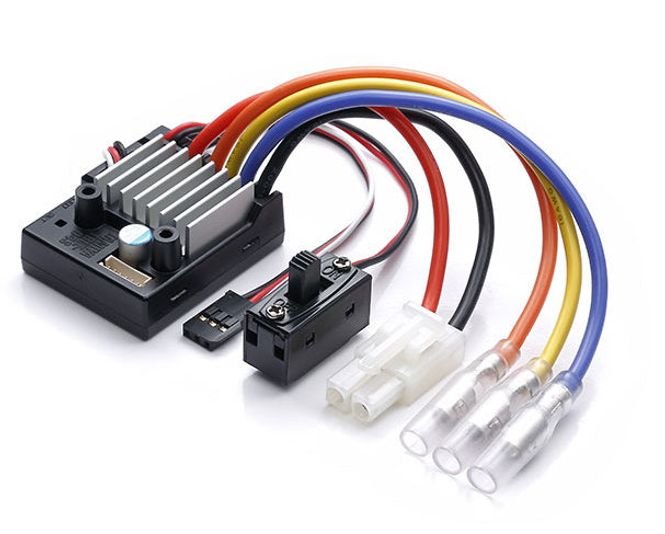
TAMIYA 45069 RC BRUSHLESS ESC 04S This ESC is designed for use with Tamiya Brushless Motors (Sensored) 15.5T and over, (Aftermarket brands 21.5 and over), and also brushed motors 25T and over. High point, neutral brake and brake settings are individually adjustable, while battery cut-off, reverse and motor modes can be selected. Setup is shown by an LED, and the ESC also features two protection functions. Maximum continuous current: 75A Input voltage: 6.6V - 7.2V Dimensions: 41.5mm x 33.4mm x 18mm Weight: 45g (including cables) • Sensored brushless ESC detects motor rotor positions with precision, enabling more efficient power supply and smoother motor response. • Compatible with Tamiya brushless motors (sensored) of 21.5+ turns, and Tamiya brushed motors 25 turns and over. • Choose from 10 different settings for both neutral brake and brake, to get your setup just how you want it. • Features overheating and overload protection functions to help ensure that your equipment avoids damage. • Weight: 47g (including cables) • Compatible with Ni-Cd, Ni-MH and Tamiya Li-Fe battery packs. • Dimensions: 41.5 x 33.4 x 18mm LO/HI Battery Cut-off Information: LOW & HIGH Battery Low Voltage Protection Feature: LOW battery setting cuts off @ 5.6 volts approximately. (Best for Ni-CD, NI-MH and Li-FE battery chemistry) HIGH battery setting cuts off @ 6.2 volts approximately. (Best for other battery chemistries) SPECIFICATIONS Electronic Speed Control (esc)  Maximum continuous current: 75A Input voltage: 6.6V - 7.2V Dimensions: 41.5mm x 33.4mm x 18mm Weight: 45g (including cables) Special Feature 1 LOW & HIGH Battery Low Voltage Protection Feature: LOW battery setting cuts off @ 5.6 volts approximately. (Best for Ni-CD, NI-MH and Li-FE battery chemistry) HIGH battery setting cuts off @ 6.2 volts approximately. (Best for other battery chemistries)

649,-

799,-

KJØP
-19%
This is a Builders 8" Screwdriver Set from Tamiya. Features: This is a set of 8 screwdrivers of assorted types and sizes. Three phillips screwdrivers. Two slotted screwdrivers. Two nut drivers. One hex wrench. One detachable grip. Packaged in a handy plastic carrying case.       (12)

289,-

299,-

KJØP
-3%
 This is a 100ml Spray Can of Synthetic Lacquer Paint from Tamiya. FEATURES: Cures in a short period of time.           Extremely useful for painting large surfaces.           100ml is enough to fully cover two or three 1/24 scale sized car             bodies.           Tamiya spray paints are not affected by acrylic or enamel paints.             Therefore, following the painting of the entire assembly, details             can be added or picked out using enamel and/or acrylic paints.  By             combining three different paints, the decoration of plastic             models will become simpler and more effective.           Available in 52 colors. INCLUDES: One 100ml Spray Can of Synthetic Lacquer Gloss Clear. REQUIRES: Eye, Lung and Skin Protection. COMMENTS: Highly Flammable, Pressurized Container.            Keep out of the reach of children.

109,-

KJØP
During the first half of WWII, German reconnaissance units greatly used the Sd.Kfz.231 series heavy armored car. Above all, the Sd.Kfz.232 was equipped with a Fu.11 radio and featured a large frame-type antenna mounted on the body. It also came armed with a KwK30 20mm cannon and an MG34 machine gun mounted on its turret. The 8-wheeled Sd.Kfz.232 had an on-road top speed of 90km/h, featured elaborate front and rear driving positions, and a superb 8-wheel drive system. These 8-wheeled armored cars were deployed to armored reconnaissance battalions of Panzer divisions and served as the eyes of the German army from Europe and North Africa to the Russian front.   This is the 1/48 Scale German 8-Wheeled Sd.Kfz.232 - Heavy Armored Car          Plastic Model Kit from the Tamiya Military Miniature Series.                          Suitable for Ages 14 & Older. FEATURES: Highly detailed plastic pieces molded in dark gray Detailed form including large frame antenna provides enhanced realism Complex suspension system is faithfully depicted Commander torso figure included Waterslide decals Illustrated instructions MARKING OPTIONS: One decal sheet with markings for 2 versions: 1) 2nd Company, 8th Armored Reconnaissnace Battalion, 5th Panzer Division, Balkan Front, 1941 2) 1st Company, 19th Armored Reconnaissnce Battalion, 19th Panzer Division, Kursk, Russia, Summer 1943 INCLUDES: One plastic model REQUIRES: Assembly Hobby knife Plastic cement Sprue cutters Paint (Dark Green, Dark Yellow, German Gray, Green, Gunmetal, Chrome Silver, Flat Black, Flat White, Flat Flesh, Metallic Gray, Red Brown) SPECS: Scale: 1/48 COMMENTS: Due to small parts that could cause a choking hazard please keep away from children 3 years of age and younger

319,-

KJØP
This is a 100ml Spray Can of Synthetic Lacquer Paint from Tamiya. FEATURES: Cures in a short period of time.           Extremely useful for painting large surfaces.           100ml is enough to fully cover two or three 1/24 scale sized car             bodies.           Tamiya spray paints are not affected by acrylic or enamel paints.             Therefore, following the painting of the entire assembly, details             can be added or picked out using enamel and/or acrylic paints.  By             combining three different paints, the decoration of plastic             models will become simpler and more effective.           Available in 52 colors. INCLUDES: One 100ml Spray Can of Synthetic Lacquer German Grey Paint. REQUIRES: Eye, Lung and Skin Protection. COMMENTS: Highly Flammable, Pressurized Container.           Keep out of the reach of children.

109,-

KJØP
This is a 1/3 oz (10ml) "Mini" glass jar of Acrylic Paint from Tamiya. FEATURES: Made from water-soluble acrylic resins and are completely safe.           Can be used on most common model plastics such as styrol resin,             styrofoam and wood.           Excellent for either brush or spray painting.           Covers well, flows smoothly with no blushing or fading, and can be             blended easily.           Jar will accept standard airbrush lid.           Can be washed away with plain water if done prior to curing.           Available in 19 glossy, 45 flat and 7 translucent colors plus an             exclusive thinner and a flat base. INCLUDES: One Mini 1/3 oz (10ml) jar of Acrylic Flat Aluminum paint. REQUIRES: Paint Brush or Airbrush to apply to model.           Eye, Lung and Skin protection.           Acrylic Thinner or Water to clean up before paint is cured. COMMENTS: Keep out of the reach of children.           Highly Flammable Paint.           For Adult Modelers Only.

30,-

KJØP
This is Tamiya TS-83 Metallic Silver Color Spray Lacquer for Plastic Models.                          For Adult Modelers Only. FEATURES: Specially developed for decorating plastic models           Synthetic lacquer cures in a short period of time           Impervious to acrylic or enamel paints           The color of the lid represents the color of paint INCLUDES: Spray can of Metallic Silver lacquer paint SPECS:    Net Volume: 3.4oz (100ml) COMMENTS:           Highly flammable

199,-

219,-

KJØP
-9%
These are 3 Tamiya Finishing Abrasive P1500 Sheets. FEATURES A proper foundation for painting is the most important part infinishing a model Gray colored on paper backing. Cut to desired size. INCLUDES Three Finishing Abrasive P1500 Sheets SPECIFICATIONS Sheet Size: 9" x 3-5/8"

39,-

KJØP
Pointed Brush (Medium)

39,-

KJØP
JPerkins 5531025 Hobby Brush 2 (1 pcs)   Key Features Synthetic brown hair Pointed round brush Seamless alumium ferrule Red lacquered short handle For aquarell applications For oil and acrylic applications The perfect school brush High elasticity Exact tip Good shape retention Bacteriologically harmless

19,-

KJØP
TAMIYA MOSQUITO B MK.IV / PR MK.IV About the De Havilland Mosquito B Mk.IV/PR Mk.IV The versatile Mosquito stood with the Spitfire fighter and Lancaster bomber and earned the respect of British pilots during World War II. In 1939, the De Havilland company envisioned the plane to be an unarmed high-speed bomber, and had experience with the Comet, which was a wooden racing plane. Except for the engine and landing gear, the Mosquito was comprised of wood, offering strategic advantages. The Air Ministry was reluctant to adopt the wooden aircraft, but placed orders for 50 planes in March 1940 for reconnaissance use. In November 1940, the Mosquito reached speeds of 630km/h during test flights, demonstrating its potential and quickly promoting additional orders of 150 planes. The Mosquito PR Mk.I reconnaissance plane was first deployed in July 1941; the B Mk.IV bomber started deployment in the Spring of 1942. On May 31, 1942, the Mosquitoes led a daylight raid on Caim. In September 1942, the Gestapo headquarters in Oslo was bombed. German officials delivering a daytime speech in Berlin were attacked on January 30, 1943. These events demonstrated the Mosquito’s ability to carry heavy loads and deliver low altitude surprise attacks with accuracy. The camera equipped PR Mk. IV reconnaissance plane discovered the German Battleship Tirpitz in the Artic Circle and scouted V2 rocket facilities. The Mosquitoes performed their duties with minimal losses, displaying their remarkable abilities.   MERKE TAMIYA PRODUKT Plastbyggesett SKALA 1:48 TYPE FLY TEMA MILITÆRT

369,-

KJØP
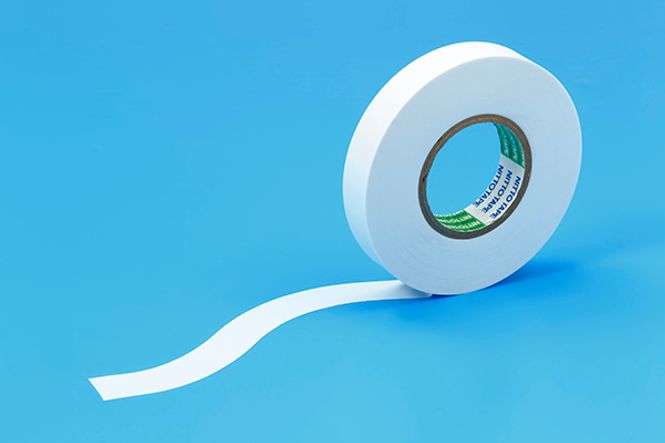
MASKING TAPE FOR CURVES 12MM

129,-

KJØP
En fantastisk maskeringsfilm som tillater å maskere kurver!   Denne er helt utrolig og må bare prøves.   Masking is a job which modelers of all kinds of models in every scale must carry out, and it requires precision in order to ensure that your creation gets the perfect paint job. This masking tape helps in the process, allowing smooth and secure masking-off of curved lines where standard masking tape would sustain creases and possibly let paint seep underneath. This tape is available in 3 separate widths to meet a variety of needs such as 2mm, 3mm and 5mm respectively. Length of roll: 20m A soft resin material is used, allowing the tape to adhere in a curved line while preventing paint from seeping into masked off areas. Use of narrower tape is recommended for sharper curves.

69,-

KJØP
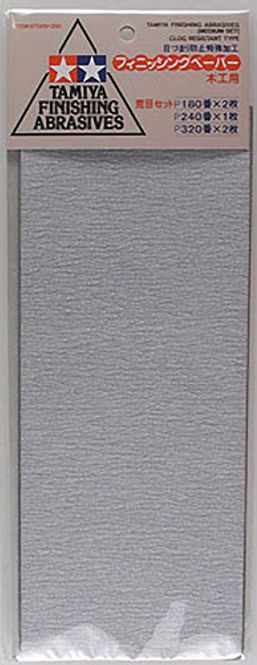
This is a Tamiya Finishing Abrasives Set (Medium). FEATURES: A proper foundation for painting is the most important part in             finishing a model!           This finishing abrasive is clog resistant type.           Three different grits.           Gray colored on paper backing.           Cut to desired size. INCLUDES: Five Finishing Abrasive Sheets SPECS:    Grit:  180 (2)                  240 (1)                  320 (2)           Sheet Size: 9" x 3-5/8"

49,-

KJØP
  This is a tube of Basic Type Tamiya Putty. FEATURES: Designed for use in repairing and modifying plastic models           May also be used for repairing and covering surface of metal and             wooden models           May be diluted with Tamiya Lacquer thinner before curing INCLUDES: 1.12oz (32g) Tube of Basic Type Tamiya Putty

49,-

KJØP
De Havilland Chipmunk T.10 1:48 With the de Havilland designed Tiger Moth biplane proving to be such an important pilot training aircraft during the Second World War, it is no wonder that the same company would have a say in producing its replacement, when both the RCAF and Royal Air Force were looking to upgrade their primary pilot training capabilities. In order to keep pace with wartime aircraft production and to allow increasing numbers of Canadian airmen to be trained, de Havilland established an overseas subsidiary in Canada, the de Havilland Aircraft Company of Canada.                                                                                                                                      Following the end of WWII, the company began design work on a new aircraft, one intended as a replacement for the ageing Tiger Moths still in RCAF service. A tandem two seat monoplane, the new trainer incorporated many advances over its predecessor, but shared many of its design philosophies, in that it was intended to be both simple to maintain and relatively forgiving to fly - these aircraft needed to be in the air, earning their keep.Having the distinction of being the first aircraft type designed and built by de Havilland Canada, the first Chipmunk took to the skies in May 1946 and almost immediately gained interest from the military.                                                                                                                                            By April 1948, the Royal Canadian Air Force had taken delivery of their first Chipmunk, but they were not the only ones admiring the qualities of this extremely capable aeroplane. The vast majority of the 1,283 de Havilland Chipmunks built would be manufactured under licence in the UK, in factories at Hatfield and Chester, with around 735 of these going on to see service with the Royal Air Force, again as the direct replacement for the venerable old Tiger Moth. In RAF service, the British built machines were known as the de Havilland Chipmunk Mk.10 and they would go on to provide basic flight training support many thousands of future military aviators, in addition to providing air experience opportunities for many more as part of the University Air Squadron organisation.                                                                                                                                              Despite being a Canadian design, the Chipmunk has become one of the most recognisable Royal Air Force aircraft of the post war era and has enjoyed a military career which began in the early 1950s and continues to this day. The Battle of Britain Memorial Flight still operate two Chipmunks regularly, providing currency training for aircrew assigned to fly the unit's historic 'taildraggers' and also to allow crews to reconnoitre new display venues in advance of their show appearance. In other situations, the aircraft can be used to deliver replacement aircrew or spare parts, whilst the Flight's Spitfires and Hurricanes are out on display duties during the Airshow season. These two Chipmunks have ensured that the aircraft must now be regarded as one of the longest serving types in Royal Air Force History.                                                                                                                                               With such an impressive military pedigree as this, it is also interesting to note that the Chipmunk has gone on to become one of the most popular aircraft types on the civilian aviation scheme and it is estimated that well over 300 aircraft are still in airworthy condition worldwide. Sometimes unfairly described as 'The poor man's Spitfire', the Chipmunk surely now has to be regarded as a historic aircraft in its own right and one which continues to underline the effectiveness of its design. With aircraft formerly serving with the RAF, Army Air Corps, Royal Navy and the mount of several RAF display teams, there is no shortage of attractive schemes available for you to present your Chipmunk in if you are lucky enough to own one, not to mention the fact that the aircraft would also be operated by several overseas air forces all over the world.                                                                                                                                                                                                                                               As a training aeroplane, it is obvious that more people would have experience with the de Havilland Chipmunk as opposed to the more glamourous front line aircraft types which are so popular with enthusiasts, however, the opportunity to still fly in one of these historic aeroplanes ensures that it continues to be held in great affection by owners and enthusiasts alike. Importantly, the Chipmunk is still fulfilling the role for which it was originally designed when making its first flight 74 years ago, providing basic flying training and allowing people to experience the thrill of flying for the first time.

349,-

379,-

KJØP
-8%
Tamiya 61118 1/48 F-14D TOMCAT DESCRIPTION This is a model assembly kit of the Tomcat F-14D, which is an updated version of the aircraft that served until the Tomcat was withdrawn from Navy service in 2006. It featured an improved engine in the shape of the General Electric F110, and the aircraft’s transition from the earlier carrier-based fighter models to the F-14D multi-role aircraft was facilitated by digital updates to radar and fire control systems. Some F-14Ds were newly-constructed, while conversions from F-14As also existed. • 1/48 scale plastic model assembly kit. Fuselage length: 398mm, wingspan: 408mm (with variable sweep wing in fully forward position). • Captures F-14D-specific features such as the engine afterburner nozzles, vertical stabilizers and even minute panel lines. • A detailed cockpit includes depictions of updated instrument panels and ejection seats. • Model parts depict late variants of Phoenix, Sparrow and Sidewinder air-to-air missiles. Also included are parts for drop tank, laser- and GPS-guided bombs, LANTIRN targeting pod, TARPS reconnaissance pod and jamming pod. • Features moving depiction of variable sweep wing. 2 sets of parts - interchangeable after completion – depict sealing plates and air bags with wing in fully swept and fully forward positions. • Poly caps allow movement of horizontal stabilizers. • Comes with realistic figures depicting pilot and RIO (Radar Intercept Officer) in seated pose. • Includes high-quality decals. • Masking stickers for use when painting the canopy included. SPECIFICATIONS Construction Type Assembly Kit Decals 4 Squadrons included Requires A Cement, Paint, and Finishing Supplies Scale 1/48

1.295,-

1.495,-

KJØP
-13%
This is the 1/350 Scale Japanese Heavy Cruiser Mogami  Plastic Model Kit by Tamiya.  Modeling skills helpful if under 10 years of age     FEATURES Highly detailed plastic pieces  May be assembled as a full hull model or waterline model  Display stand included  Photo-etched parts included for enhanced detail  2 E8N and 4 E13A aircraft included  Anchor chain and propeller shafts made with metal parts  Waterslide decals  Illustrated instructions   INCLUDES One plastic model   REQUIREMENTS Assembly  Sprue cutters   Hobby knife   Cement for plastics   Paint (Linoleum Deck Brown, Red, Gunmetal, Gold Leaf, Park Green,  Flat Black, Flat White, Hull Red, JN Gray, Flat Aluminum,  Metallic Gray, Desert Yellow, Red Brown, Dark Green)   COMMENTS Due to small parts that could cause a choking hazard please keep  away from children 3 years of age and younger

1.695,-

1.795,-

KJØP
-6%
 This is a 100ml Spray Can of Synthetic Lacquer Paint from Tamiya. FEATURES: Cures in a short period of time.           Extremely useful for painting large surfaces.           100ml is enough to fully cover two or three 1/24 scale sized car             bodies.           Tamiya spray paints are not affected by acrylic or enamel paints.             Therefore, following the painting of the entire assembly, details             can be added or picked out using enamel and/or acrylic paints.  By             combining three different paints, the decoration of plastic             models will become simpler and more effective.           INCLUDES: One 100ml Spray Can of Synthetic Lacquer Gun Metal Paint. REQUIRES: Eye, Lung and Skin Protection. COMMENTS: Highly Flammable, Pressurized Container.            Keep out of the reach of children.

109,-

KJØP
Connector Futaba gold plated pair

25,-

KJØP
D-MAX Wire Set Red & Black - 22AWG 1+1m This is a high quality wire with a high amount of copper strands making it very suitable for RC models and other hobby projects. The wire is covered with a silicone based insulation material and together with the high strand count it’s also very flexible.   Short and Thick is Good In electric high powered models we are recommending you to use short and as thick wires as possible (within reason) together with a matching diameter/area connector system for optimum performance. Specifications: Length: 1+1m AWG Wire: 22 Area Wire: 0.34mm2 Diameter Wire: 0.6mm Diameter Insulation: 1.7mm Wire: 60 Strands of Copper @ 0.08 mm Insulation: Silicone Based

29,-

KJØP
  • klarna-dark.png
  • vipps-orange.png
  • mastercard-full.png
  • visa.png
  • paypal.png